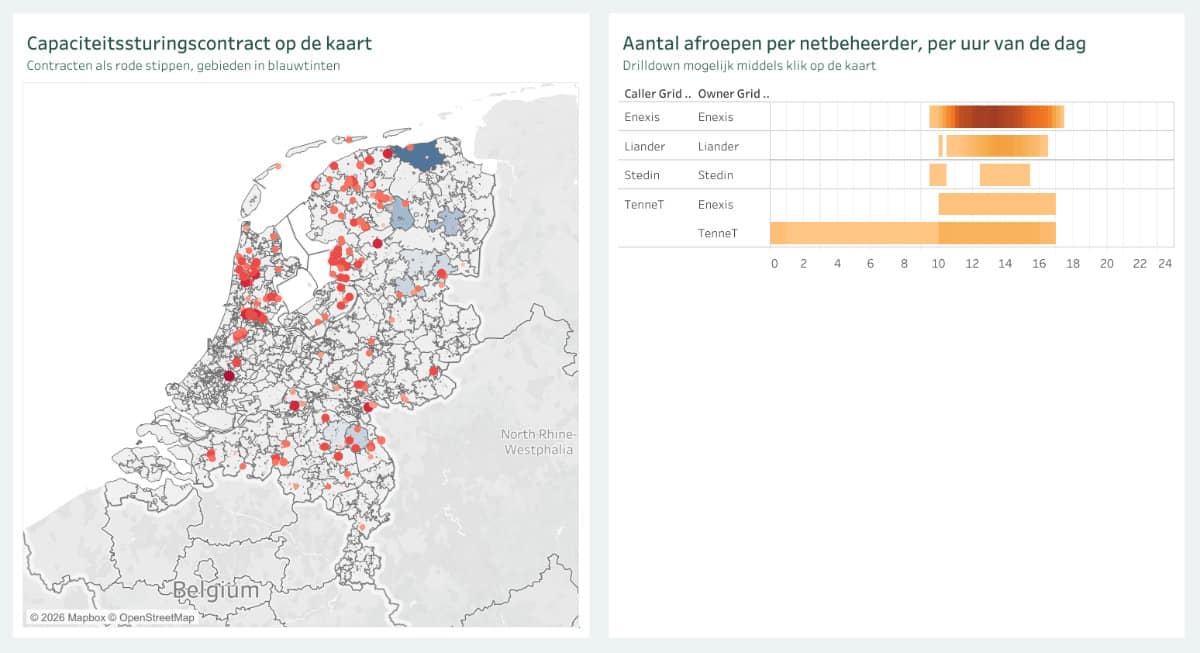
This overview contains all CLC and CSC activations for the period from 1 to 27 May. For each activation, the activation date, the location (substation/congestion area), and the activated volume in MWh are displayed. The map visualizes this data spatially:
The combination of the Excel overview and the map provides insight into both the distribution of concluded contracts and their actual utilization (activations).
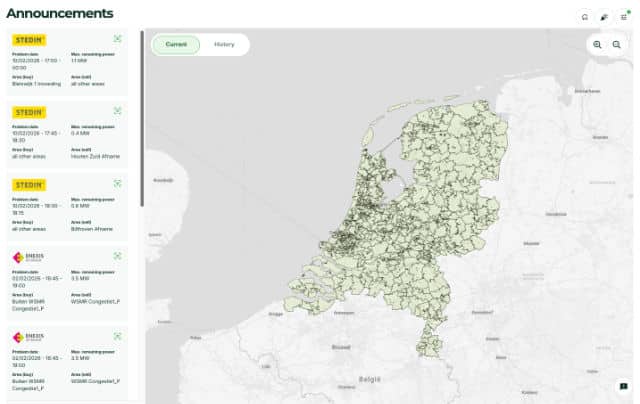
The overview of issued market messages provides direct insight into the specific moments when redispatch was requested to prevent overload on the electricity grid.
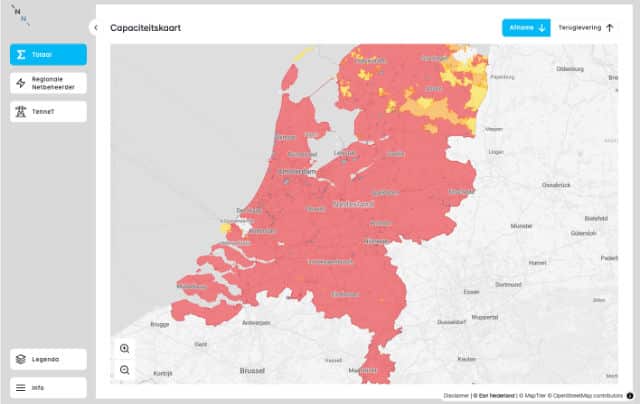
The national capacity map offers everyone an indicative overview of the current congestion situation, waiting lists, and planned grid expansions for grid grid-demand and supply.
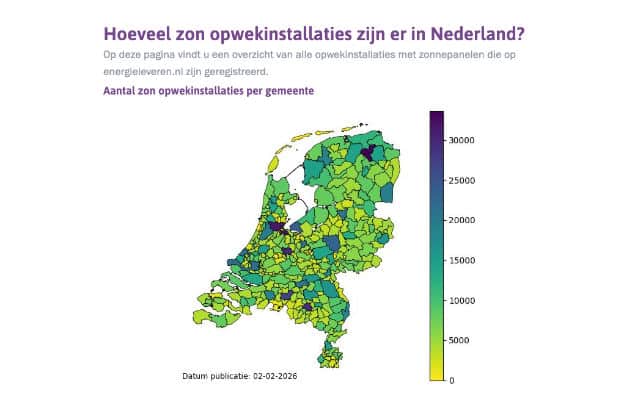
This platform is the official, central portal where users can register solar panels or generation installations with the grid operator to safely supply power to the grid.
Whether you’re a large customer or a CSP, data-driven decision-making is important for everyone. That’s why we’re continuously working on expanding access to our congestion data. Do you have questions about our figures, or suggestions for additional data?
Fill out the form on the right, and our case manager will get in touch with you as soon as possible.
No. Due to privacy reasons, this is not possible. On our website, we only publish information that complies with the legal transparency requirements set out in the Grid Code (Netcode) and ENTSO-E regulations.
Grid operators are increasingly able to estimate where and when the electricity grid may come under pressure, based on real-time grid data and forecasts. However, a congestion situation cannot always be predicted down to the exact quarter hour. It depends on factors such as electricity production, consumption, and weather conditions.
When grid operators expect congestion, they deploy flexibility in a targeted way. This can be done in several ways:
In short, grid operators can often identify the main risk areas and moments, but they combine real-time insights with different instruments — such as redispatch and CLCs — to activate flexibility at the right place and time.
On this page you will find the congestion areas for which grid operators are making or have made a call for proposals.
This depends on the flexibility product you choose. When participating through redispatch, you receive compensation based on market prices for the flexibility you provide. With contract types such as a Capacity Limiting Contract (CLC) or a Mandatory Bidding Contract, fixed availability payments or control payments may also apply. The exact compensation structure depends on the grid operator and the specific contract.