Maijer has been at the helm of Enova as managing director since 2024. Together with Thomas van der Maas and a team of energy managers, the company operates installations 24/7 for large corporate clients with connections exceeding 1 MW. Enova fulfils both the role of CSP and BSP in this regard. “This means we have everything in-house to provide our clients with a comprehensive service,” says Maijer. “There was a time when energy projects were mainly driven by subsidies. With a good contract, the maths was simple. Those days are over. The market is more volatile. Negative prices in the summer mean you have to pay to supply. That’s when you need someone who actively manages the situation.”
Energy costs determine competitive position
Enova has been managing flexibility for over twenty years, with its roots in greenhouse horticulture, where CHP plants required active control. “Our clients operate in horticulture and agriculture. But our client base also includes food producers, cold stores, industry, and solar and wind farms. Control over energy is crucial for these businesses,” says Van der Maas. “If energy accounts for a substantial part of your cost price, a price rise immediately puts your competitive position under pressure.” Maijer adds: “Depending on the type of business and previous investments, we optimise energy management. When do you feed energy back into the grid? When do you temporarily switch off? Do you run your cooling system at a different time? How do you protect yourself against extreme price spikes? We know exactly where the flexibility lies for every customer.” That flexibility is limited. A cold store cannot simply be switched off. In greenhouse horticulture, you can dim the lights to the point where it is acceptable for production. Enova knows this point, for each customer.
Pooling of assets
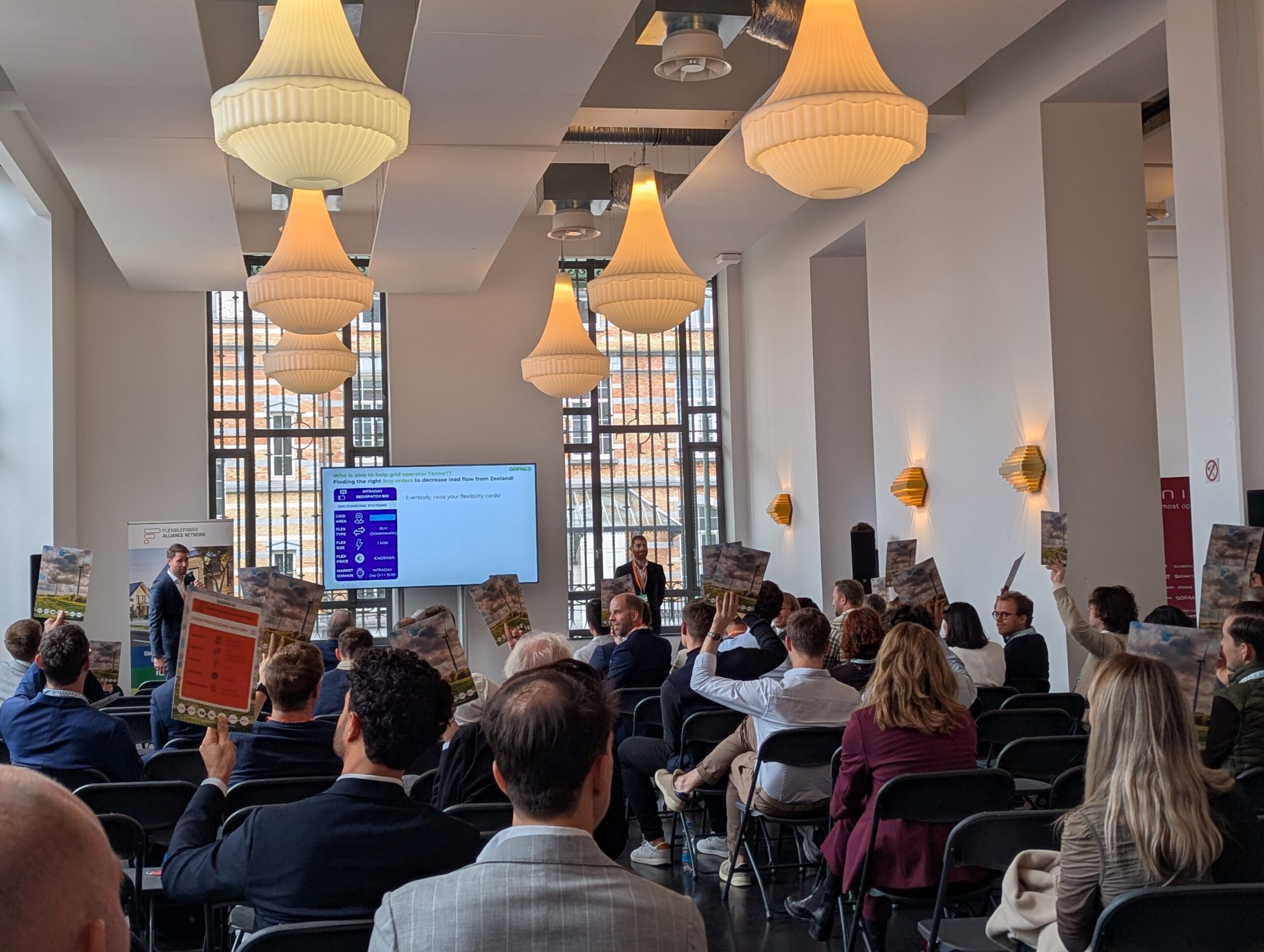
“We have just as much flexibility at our fingertips as a large power station,” says Van der Maas. “It’s just spread across multiple assets.” Individual installations ranging from 1 to 5 MW are often unable to participate independently in flexibility markets. As an aggregator, Enova bundles these capacities. “Pricing is everything,” emphasises Maijer. “What does it cost not to have electricity? We know that. In extreme situations, an operator is quite willing to shut down temporarily, provided the price justifies it.” That is why he is a firm believer in market mechanisms such as GOPACS. “At least that is a system where supply and demand meet.” According to Maijer, congestion is less a technical shortage than a pricing issue. “There is almost always capacity. We’re just pricing it wrong. Congestion isn’t the problem; pricing is.”
Maijer is convinced that when prices become more dynamic and localised, greater flexibility is unlocked. “Companies have different processes, margins and risk profiles. And therefore also a different value placed on flexibility. With the right market mechanism, that potential can be harnessed.” According to Enova, the key lies not in building for the maximum peak demand, but in steering behaviour through market incentives.

Dimitri Maijer and Thomas van der Maas of Enova
Not connections, but businesses
Whilst TenneT is accustomed to dealing with commercial market players, Enova has noticed that regional network operators are still trying to define their role. “The dialogue is moving in the right direction; they want to move forward. They are increasingly able to see the businesses behind the connections,” says Maijer. “Nevertheless, they should collaborate with the market more often. We can manage 2,000 to 3,000 MW regionally, spread across the country.” Enova knows exactly where customers are located, which EAN number corresponds to them and what capacity is available. When asked what could be improved in congestion management, he replies: “We need to manage both nationally and locally. Sometimes you have to use less temporarily. Sometimes you can produce locally so that transmission isn’t necessary. A significant part of the solution lies at the regional level. It’s a pity that GOPACS only manages at the national level.”
The dynamic value of flexibility
“Every restriction has a market value,” says Van der Maas. “Sometimes it’s better to supply, sometimes to restrict. That varies from company to company, from moment to moment, and even from season to season.” Although congestion-mitigating contracts such as CBC and CSC are becoming more common, he believes fixed prices do not work well. “The value of flexibility is dynamic. What works this year may be different next year. We prefer to work with formulas that move with the market.” Practical challenges also play a role. In the case of redispatch or intraday bids, positions must be adjusted to avoid imbalance costs. These market mechanisms do not automatically reinforce one another. “Sometimes the imbalance costs are higher than what you’ve earned,” explains Van der Maas. “And because you often only know those costs afterwards, that makes it complex.” To limit risks, Enova therefore offers emergency or balancing capacity via TenneT or runs the intraday bids on the GOPACS platform via the energy company.
One thing is certain: the market has become more complex and the scale larger, but for Enova’s customers, the core remains the same: taking control of energy. “If governance is in order, you let the market do its job and, on top of that, collaborate effectively,” concludes Maijer, “you can solve more than we currently think.”