CLC-A
1A CBC-A specifies that you may be asked to reduce your use of transport capacity during peak times.

GOPACS is designed to address grid congestion in a targeted and collaborative way. In places where the electricity grid temporarily reaches its limits, GOPACS helps grid operators respond quickly and efficiently. This keeps the grid reliable, affordable, and ready for further growth and decarbonisation.
Through GOPACS, grid operators deploy flexible capacity from market parties and large energy users: exactly where congestion occurs and only when it is needed. By coordinating this flexibility intelligently, additional room is created on the grid without causing new bottlenecks elsewhere.
GOPACS is a unique collaboration between all Dutch grid operators. By working together nationally and managing congestion through a single platform, the electricity grid as a whole becomes stronger and more future-proof.
GOPACS is the joint platform of the Dutch grid operators for congestion management. We help keep the electricity grid reliable at times and locations where it risks becoming temporarily overloaded.
We do this by deploying flexible capacity in a smart way. When grid operators expect congestion, GOPACS brings together supply and demand for flexibility. Market parties can temporarily adjust their production or consumption. Through our platform, exactly the flexibility that is needed is activated: locally, at the right moment, and without creating new bottlenecks elsewhere on the grid.
GOPACS coordinates this process, matches bids based on real-time grid data, and always selects the most efficient solution. This creates room on the grid again, companies receive compensation for their flexibility, and the energy system remains balanced.
In short: GOPACS connects grid operators and market parties to solve grid congestion in a targeted, transparent, and cost-efficient way.
There are no costs associated with registering for or using the GOPACS application.
Participation in GOPACS is of interest to any market participant that can influence its electricity consumption or generation. Read more about participating here.
Flexibility delivers more value than you might think. By participating in GOPACS, you not only help create space on the electricity grid. You also gain clear benefits. You contribute directly to the electrification and decarbonisation of the Netherlands, reduce costs, and strengthen your own operations.
Participation may require adjustments to your processes. That is why grid operators aim to make participation through GOPACS as attractive as possible:
Flexibility is needed both inside and outside congestion areas so that grid operators can maintain balance across the electricity system. GOPACS coordinates this intelligently at a national level. The result is a clear win-win: the grid remains reliable and future-proof, while you turn flexibility into certainty, capacity, and value.
Congestion occurs when the demand for electricity transport exceeds the available transport capacity. In other words, there is not enough capacity on the electricity grid to transport all the electricity that is needed at that moment.
If this situation is structural, the grid operator will reinforce or expand the electricity grid. However, expanding the grid is a process that takes several years. In the meantime, grid operators try to manage the available capacity by shifting where and when electricity is consumed or generated. They do this with support from the market, such as large energy users, aggregators and energy suppliers.
These parties can help by shifting their electricity consumption or generation to another moment. Energy can also be stored temporarily. This creates the flexibility needed to prevent or reduce peaks on the electricity grid.
When a grid operator expects a shortage of transport capacity (congestion), the market is asked to help resolve it by adjusting energy consumption. This adjustment creates flexibility.
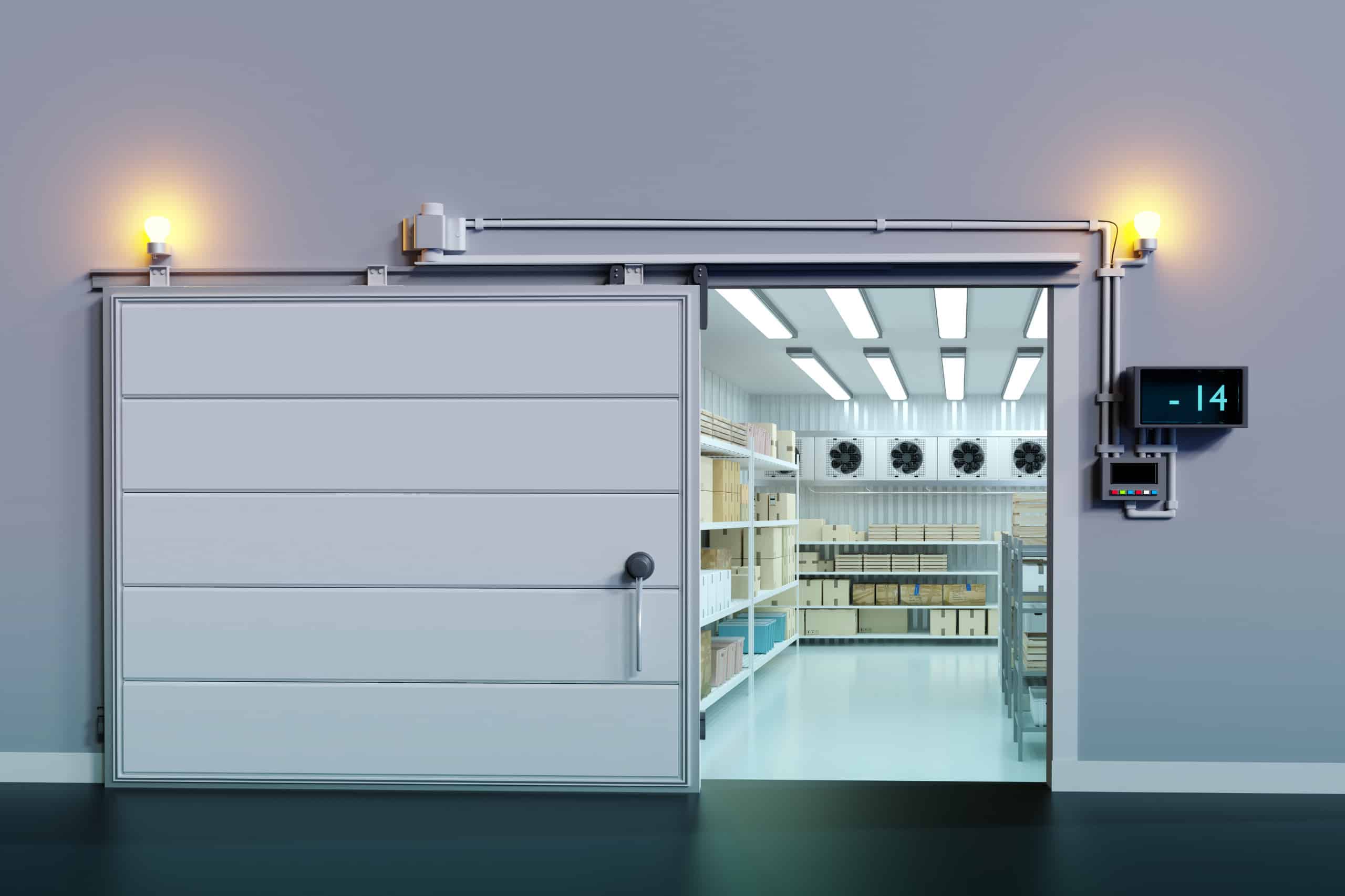
For example, a cold storage facility could switch off its freezers for two hours during a peak demand period without affecting the temperature. This frees up capacity on the grid for another user.
For more information on congestion, see the ‘About congestion management‘ page.
Congestion management is the set of measures deployed by network operators to mitigate the effects of congestion and prevent the network from becoming overloaded. Whereas congestion indicates the problem of capacity shortage, congestion management focuses on the practical solutions to deal with these bottlenecks. Congestion management is crucial for a stable, affordable and sustainable energy supply in the Netherlands. It will become increasingly important as power demand and the share of renewables continue to grow. Read more about congestion management here.
Grid operators are increasingly able to estimate where and when the electricity grid may come under pressure, based on real-time grid data and forecasts. However, a congestion situation cannot always be predicted down to the exact quarter hour. It depends on factors such as electricity production, consumption, and weather conditions.
When grid operators expect congestion, they deploy flexibility in a targeted way. This can be done in several ways:
In short, grid operators can often identify the main risk areas and moments, but they combine real-time insights with different instruments — such as redispatch and CSCs — to activate flexibility at the right place and time.
You can find all areas here: https://capaciteitskaart.netherlands.en/
Flex bids are bids from market parties to temporarily adjust their electricity consumption or production at an agreed price. They form the basis of redispatch: the market mechanism grid operators use to resolve expected congestion on the electricity grid.
When grid operators expect the grid in a certain area to become overloaded, they initiate a redispatch request via GOPACS. A market message specifies where and when flexibility is needed.
Market parties — such as energy suppliers, CSPs, and large energy users — can respond with a flex bid. In this bid, they indicate how much flexibility they can provide and at what price, for example by temporarily producing less electricity, consuming more, or reducing their demand.
GOPACS compares and combines these flex bids and selects the most efficient solution to resolve the congestion, while ensuring that no new bottlenecks arise elsewhere on the grid. If a flex bid is accepted, the party temporarily adjusts its consumption or generation and receives compensation.
In this way, flex bids make redispatch possible: fast, targeted, and market-based congestion management.
Electricity consumption and generation change continuously. At peak moments, local demand or generation can exceed what the electricity grid can handle. This situation is called congestion. Without intervention, it can lead to grid overload.
To prevent this, grid operators initiate redispatch via GOPACS. They ask the market to provide flexibility at the location and time where the grid is under pressure.
Flex bids make this possible. With a flex bid, a market party indicates how much flexibility is available, when it can be delivered, and at what price. For example, by temporarily producing less electricity, consuming more, or reducing electricity demand.
Grid operators use these bids to adjust supply and demand locally. This helps smooth out peaks and keeps the grid balanced — exactly where the bottleneck occurs and only for as long as needed. In this way, the electricity grid remains reliable and flexibility gains value in the market.
Yes. Flex bids are an important instrument for temporarily resolving congestion through redispatch.
When grid operators expect the transport capacity in a certain area to be exceeded, they initiate a redispatch request via GOPACS. A market message specifies where and when flexibility is needed. Market parties can respond with a flex bid: an offer to temporarily adjust their electricity consumption or generation in exchange for compensation.
GOPACS then combines these bids and selects the most efficient solution. For example, electricity production or consumption is reduced within the congestion area, while an opposite adjustment takes place outside that area. This keeps the electricity system balanced and prevents new bottlenecks elsewhere on the grid.
If the selected flex bids are sufficient, the load remains within the available transport capacity and the congestion is resolved for that moment, without requiring structural grid reinforcement.
You determine the price of your flex bid yourself. There is no fixed price: redispatch operates through a market-based mechanism.
When grid operators issue a redispatch request via GOPACS, market parties can submit a flex bid with the price at which they are willing to temporarily adjust their electricity consumption or generation. GOPACS compares these bids and selects the most efficient combination to resolve the congestion.
Whether your bid is accepted depends on the market situation at that moment. For example, on the amount of flexibility required, the number of available bids, and the prices offered by other market participants.
Ultimately, the market determines which price is selected, ensuring a market-based compensation for the flexibility that is actually activated.
Yes. When a grid operator expects congestion, a redispatch request is issued via GOPACS. GOPACS then sends a market message indicating where and when flexibility is needed.
If you receive such a message, you can submit a flex bid for that location and period on a participating trading platform. In your bid, you specify how much flexibility you can provide and at what price.
GOPACS compares the submitted bids and selects the most efficient combination within the redispatch process to resolve the congestion.
To place flex bids yourself, you must be certified as a CSP (Congestion Service Provider). You can also have an external CSP participate in the market on your behalf.
Yes. Flex bids can only be submitted by a certified CSP (Congestion Service Provider). You can either become a CSP yourself or outsource this to an external CSP.
If you choose to work with an external CSP, this party will submit flex bids on your behalf within the redispatch process. Together, you agree on how your flexibility will be deployed. For example, on the control of your installations, the available capacity, and the distribution of compensation when your flexibility is activated.
Certification as a CSP is requested through TenneT. The TenneT website provides an up-to-date overview of all certified CSPs.
You can see this in the congestion portal. In addition, grid operators publish current congestion situations on their own websites and on GOPACS.eu.
When grid operators issue a redispatch request via GOPACS, a market message indicates where and when flexibility is needed. Based on this information, market parties can submit flex bids.
Flex bids via GOPACS are submitted by a certified CSP (Congestion Service Provider). You can become a CSP yourself or work with an external CSP. These parties aggregate the flexibility of their customers and place bids on the market on their behalf.
An up-to-date overview of all certified CSPs can be found on the TenneT website.
No. A flex bid is not automatically activated in redispatch. Whether your flex bid is selected depends on several factors:
When a redispatch request is issued, GOPACS selects the combination of flex bids that resolves the congestion most effectively and cost-efficiently, without creating new bottlenecks elsewhere on the grid. Only the selected bids are activated and compensated.
A flex bid therefore does not guarantee activation, but it does give you the opportunity to monetise your flexibility when it is actually needed.
No. Participating in flex bids through redispatch does not directly affect the order in which requests for additional transport capacity are processed. Grid operators use a fixed system for this: applications are handled in the order they are received. Taking part in flex bidding does not change that position.
What flex bids do contribute to is reducing or temporarily resolving congestion. Through GOPACS, market parties help smooth out peaks on the grid. This increases the available capacity on the network and can help relieve congestion areas more quickly.
All grid users ultimately benefit from this. In short: flex bids do not provide individual priority, but they do help make better use of the grid as a whole.
Becoming flexible does not automatically remove transport restrictions. Grid operators do everything they can to prevent such limitations, but due to the rapidly growing demand for electricity this is not always possible.
What flexibility does help with is temporarily reducing or managing congestion situations. With the help of customers who make flexible capacity available, grid operators can use GOPACS to smooth out peaks on the grid. These situations are often short-lived, such as busy weeks during the winter. This deployment helps prevent the electricity grid from becoming overloaded and improves the reliability of the system. However, it does not automatically create structural additional transport capacity.
In many cases, increasing your connection capacity still requires grid reinforcement or the construction of additional substations.
In short: flexibility helps prevent problems and makes better use of the existing grid, but it does not replace structural grid expansion.
A Capacity Steering Contract (CSC) is an agreement with the grid operator to temporarily adjust your electricity consumption or feed-in whenever this is needed to support the electricity grid. With CSC-T, these adjustments take place during predefined time windows. With CSC-A, adjustments are made when the grid operator expects congestion to occur. The terms, conditions, and compensation are agreed in advance, so there is no need to submit bids or participate in a market mechanism.
A Mandatory Bidding Contract works differently. With this contract, you commit to always submitting a redispatch bid when congestion is announced. Your flexibility is therefore deployed through the market: you set the price each time and are only compensated if your bid is actually selected.
In short:
Both contracts help grid operators address congestion in a controlled and targeted way, each with a different structure and degree of flexibility.
Through GOPACS, grid operators use several congestion products to temporarily relieve pressure on the electricity grid:
Together, these products ensure that congestion is addressed in a targeted, efficient way and without creating new bottlenecks elsewhere on the grid.
A Capacity Steering Contract (CSC) is an agreement with the grid operator to temporarily adjust your electricity consumption or feed-in whenever this is needed to support the electricity grid. With CSC-T, these adjustments take place during predefined time windows. With CSC-A, adjustments are made when the grid operator expects congestion to occur. The terms, conditions, and compensation are agreed in advance, so there is no need to submit bids or participate in a market mechanism.
A Mandatory Bidding Contract works differently. With this contract, you commit to always submitting a redispatch bid when congestion is announced. Your flexibility is therefore deployed through the market: you set the price each time and are only compensated if your bid is actually selected.
In short:
Both contracts help grid operators address congestion in a controlled and targeted way, each with a different structure and degree of flexibility.
To arrange a Capacity Steering Contract (CSC), you need to contact your grid operator. The contract is concluded directly between you and your grid operator.
In the case of a CSC-A (dynamic / activation-based), you will register on GOPACS as part of the follow-up process. When congestion is expected, you will receive a flex message via GOPACS (possibly through your CSP).
For a CSC-T (static / time-based), GOPACS does not play an active role.
You arrange a mandatory bidding contract through a CSP (Congestion Service Provider). The CSP manages participation in redispatch on your behalf and ensures that a bid is always submitted when congestion is announced.
Together with the CSP, you agree on aspects such as:
The grid operator then uses the mandatory bidding contract to ensure that market participation and flexibility are available when congestion is expected. You can also become a CSP yourself. The certification of CSPs is arranged through TenneT.
It is recommended, but not mandatory. You can also arrange this yourself.
A CSP (Congestion Service Provider) can support you in offering and controlling your flexibility, handling bids, and managing the operational processes related to congestion management. For many parties, this makes participation easier because the CSP takes care of the technical and market-related processes.
If you have the knowledge, systems, and operational capacity to manage this yourself, you can also take on this role independently. In that case, you organise the control of your flexibility and the coordination with the grid operator yourself.
In short: a CSP is not required, but it can make participation easier.
A Capacity Steering Contract (CSC) is an agreement between a grid operator and a company with flexible electricity consumption, generation, or storage. Under this contract, the company helps relieve pressure on the electricity grid during periods of congestion. In return, it receives financial compensation.
There are two types of Capacity Steering Contracts:
With both contract types, the company’s regular transport capacity remains available outside the agreed steering periods. This allows companies to make smart use of their flexibility, earn financial compensation, and contribute to a more reliable electricity grid.
A CSC-A (Capacity Steering Contract – on demand) is an agreement with your grid operator in which you make flexible capacity available. You adjust your electricity consumption, production, or storage when the grid requires it. The grid operator calls on you when congestion is expected, usually one day in advance. During that period, you temporarily increase or decrease your capacity to relieve pressure on the electricity grid. You retain your transport capacity but deploy flexibility exactly when it’s needed. In return, you receive compensation for both availability and actual activation. This way, you actively contribute to a reliable electricity grid while monetizing otherwise unused flexibility.
A CSC-T (Capacity Steering Contract – time-based) is an agreement with your grid operator in which you adjust your electricity consumption or production at fixed, pre-agreed times. You actively steer consumption, feed-in, or storage within these defined time windows. This allows you to increase or decrease capacity during peak moments on the grid. Because the timing is agreed in advance, your participation is predictable and easy to plan. You retain your transport capacity while deploying flexibility in a targeted way when the grid is structurally under pressure. In return, you receive a fixed compensation for making your flexibility available and using it. This helps keep the electricity grid balanced while creating value from your flexibility.
This depends on the flexibility product you choose. When participating through redispatch, you receive compensation based on market prices for the flexibility you provide. With contract types such as a Capacity Steering Contract (CSC) or a Mandatory Bidding Contract, fixed availability payments or control payments may also apply. The exact compensation structure depends on the grid operator and the specific contract.
Not necessarily. The price of a congestion trade, just like a regular trade, is determined by the market, not by GOPACS.
What is different:
This means a congestion trade can be financially attractive, but only if your bid is competitive enough. There is no guaranteed higher return.
No. A grid operator cannot guarantee that your bid will be activated. Whether your bid is used depends on:
The grid operator only selects bids that actually contribute to resolving the congestion situation at that moment.
When an order is matched via GOPACS, you as a market participant will receive notification of this from the trading platform. Financial settlement is also done through the trading platform.
The connection must be measurable via an EAN code and equipped with appropriate metering equipment. Reliable and up-to-date measurement data must be available, and the flexible capacity must be controllable on request. In many cases, the flexible capacity must be at least 100 kW to qualify for available contract types.
If your bid is selected, you will receive a confirmation via the trading platform.
From that moment:
No. Due to privacy reasons, this is not possible. On our website, we only publish information that complies with the legal transparency requirements set out in the Grid Code (Netcode) and ENTSO-E regulations.
You can view the congestion requests from grid operators and TenneT on the Market Messages page. Information about activated orders, volumes and prices can be found on the Expenditures page. For more details, please visit our page on the Congestion Market Data Portal.
A CSP (Congestion Service Provider) manages congestion management on behalf of one or more connected parties. The CSP aggregates flexibility, submits bids, and ensures execution and settlement in accordance with the Grid Code.
This applies to connected parties with a contracted transport capacity (GTV) of 0.1 MW or higher.
Yes, the CSP recognition is nationwide and thus applies to all grid operators. Registration as a CSP is only required once. However, you must additionally complete a prequalification per connection.
The recognition procedure for CSP applies in principle to everyone. Each party must go through the CSP approval process. There is, however, an accelerated registration process available for parties that were already providing congestion management services via GOPACS or RESIN before the new Netcode (2022).
Cross-Platform Activation (XPA) makes it possible to match buy and sell bids from different trading platforms (such as ETPA, EPEX SPOT, and soon Nord Pool) regardless of where the bid was placed. With XPA, smaller bids from different platforms can be combined into a larger bid that meets the grid operator’s request. This helps resolve congestion situations faster and increases the likelihood that bids will be activated.
Flexible capacity that you offer through GOPACS can often also be used in other energy markets, such as FCR, aFRR, or the imbalance market.
Good coordination is essential:
This helps prevent double use of capacity or conflicting activations.
You can sign up for a GOPACS account on this page. Would you first like to know more about participating? You can find that information here.
On this page you will find the congestion areas for which grid operators are making or have made a call for proposals.
Large consumers who place flex bids in the congestion portal find their bills there. Organizations that place orders through a trading platform find their invoices there.
There are no direct costs for using GOPACS. However, costs may arise from working with a CSP or from internal adjustments required to make your installation suitable for participation.
You can reach us via the contact form on the contact page. Are you a wholesale customer or from a market party? Then you can also call your relationship manager at your own network operator.
Unfortunately, we cannot be reached by phone. It is best to use the contact form for your questions. Because GOPACS is a partnership of the grid operators, this is the fastest way to make sure your question gets to the right person. However, you can call the relationship manager of your network operator. Here you can also ask questions about GOPACS, congestion management in general and flexible contracts.
Use this form to ask your question about GOPACS or congestion management. Usually we will sen you an answer within two working days.